
Dust Monitoring
DustScanAQ provides low-cost, easy-to-use dust monitoring equipment and professional dust monitoring services for a wide range of industrial and commercial sites. Our dust monitoring solutions are commonly used across construction and demolition, mineral extraction, materials handling and processing, sawmills, and waste and recycling sites.
Our dust monitoring equipment can support site boundary and receptor monitoring, establish baseline dust levels, investigate potential dust nuisance, assess the effectiveness of dust control measures, and support ongoing compliance monitoring. We can supply equipment for clients to operate themselves, as well as provide professional installation, sample analysis, reporting, and consultancy support.
Dust Monitoring Equipment
We provide a range of passive dust monitoring equipment designed to assess potential dust nuisance impacts:
- The DustScan DS100 directional dust monitor collects fugitive dust in horizontal flux from 360° around the sampling head using a sticky pad. The sampling head consists of a cylinder mounted on a peg that is aligned to the north during installation. The DS100 is commonly used for site boundary monitoring and to identify the direction from which dust has originated and travelled.
- The DustScan DustDisc is a dust deposition monitor used to collect and assess dust settlement and deposition rates using a horizontally mounted sticky pad. It can be post-mounted or bracket-mounted, providing a simple, discreet monitoring solution for site boundaries and sensitive receptor locations.
- The DustScan DS100-D combines the directional monitoring capability of the DS100 with the DustDisc deposition sampler. This post-mounted dust monitoring equipment can be used at site boundaries and off-site or proxy receptor locations where both directional and depositional dust monitoring is required.
Our dust monitoring and analysis methodology is referenced in IAQM guidance. The passive dust monitoring equipment is easy to install and uses replaceable sticky pad samplers. Two sets of sampling heads are supplied with each monitor and are typically changed on a weekly or fortnightly basis. Used sampling equipment is returned to us for analysis, while the replacement sampler is supplied with a new sticky pad ready for the next monitoring period. This enables continuous dust monitoring.
Samples are analysed using bespoke in-house software to calculate absolute area coverage, or AAC%, which measures the percentage of the sample covered by dust, and effective area coverage, or EAC%, which assesses the darkness of the dust soiling. Both measurements can help assess the potential for dust nuisance. Following analysis, reports are provided to clients electronically.
Our Dust Monitors

The DustScan DS100 is a directional dust sampler that collects fugitive dust in horizontal flux from 360° around the sampling head using a sticky pad. It is commonly used for site boundary monitoring and to identify the direction from which dust has originated.
Collected dust is analysed using our bespoke software to determine dust coverage, measured as AAC, and dust soiling, measured as EAC. These measurements are expressed as percentages and are referenced in IAQM guidance. Further analysis can also be undertaken where required to characterise the sampled dust and help investigate potential sources.
DustScan DS100 sticky pad gauges are designed to be highly resistant to tampering. Attempts to add or remove collected dust are generally evident when the samples are examined.
The gauge is robust, inexpensive, and straightforward to install and operate. It can be used in a wide range of weather conditions and does not require a power supply.

The DustScan DustDisc is an innovative low-cost dust settlement sampler. It is composed of a horizontal sticky pad in a convenient handling case that slides into a bespoke sampling head.
DustScan DustDiscs are used to measure dust deposition either as a stand-alone dust settlement sampler or in conjunction with other DustScan gauges.
When combined with a DustScan DS500X-D PM10 gauge, dust settlement, dust flux and gravimetric PM10 concentrations can be monitored in one installation. This unit is also ideal for comprehensive site boundary monitoring when combined with a DustScan DS100 sampler (a DS100-D).
DustScan DustDisc options available are:
- DustDisc-B – A stand-alone dust settlement sampler, supplied with a mounting bracket for attachment to site hoardings, lampposts, etc
- DustDisc 1.7 – As above but supplied with a 1.7m mounting post instead of a bracket
- DS100-D – A combined, post-mounted directional and depositional sticky pad dust gauge
- DS500X-D – A combined directional and depositional dust and gravimetric PM10 sampler
- DustDisc upgrade – Compatible with either the DS100 or DS500X gauges
DustScan DustDisc samplers are less expensive and easier to use than other dust deposition monitors, such as Frisbee gauges, and can be readily transported using standard postage.

The DustScan DS100-D is a combined directional and deposited dust sampler.
The unit combines the DS100 sticky pad directional dust gauge with the DustDisc dust settlement gauge by replacing the standard DS100 rain gauge with a DustDisc holder and bird-strike guard.
The directional and deposited dust sampler collects dust in horizontal flux from 360° around the sampling head as well dust depositing out of the air. The DustScan DS100-D can be used for monitoring on site boundaries or at receptors. The collected dust is measured using DustScan’s unique software to determine dust coverage (AAC) and dust soiling (EAC); these measurements are expressed as percentages and are noted in IAQM guidance. Subsequent analysis can be used on the DustDisc to determine the mass of material and calculate the dust deposition rate. If required, deposited or fugitive dust may be further investigated using microscopic or other analytical methods.
Sampling periods should be regular and uniform in order to deduce useful information.

The DustScan DS500X is a low-cost flexible method for ambient, outdoor dust and fine particulate monitoring.
It combines the standard DustScan DS100 directional sticky pad dust gauge and a battery-powered, filter reference, gravimetric PM10 sampler in one unit for simultaneous monitoring of dust flux and airborne particulates. A stand-alone PM10 sampler option is also available, and it can also be supplied with either a PM4 or PM2.5 size selective inlet.
The PM10 sampler is not a “reference” method or a real-time indicative particulate monitor. It is an entry-level device that utilises a certificated PM10 size-selective inlet impactor system and collects physical samples of dust. The sampler is programmed to run at 5 l/min continuously for 7 days so that the PM10 sampling interval coincides with the recommended sticky pad sampling duration. This means that installations only need attending once a week by site staff.
The sampler can be powered by a mains connection but has been specifically designed to utilise 12v batteries. Batteries allow the DS500X to be installed in remote locations where a mains power supply is unavailable.
The DS500X utilises the same directional components as the DS100 gauge (see the DS100 product pages for information about the directional sticky pad component of the DS500X). The PM10 sampler unit is housed inside the gauge post. 2 batteries are provided with each gauge to allow for continuous sampling which are housed in weatherproof boxes.

The DustScan Cloud monitoring service utilises the products and data management platforms of a variety of real-time monitor manufacturers.
We work with our clients to specify and source the most appropriate equipment for their individual monitoring applications.
This includes measurement and reporting in real-time for PM1, PM2.5 and PM10, deriving particulate mass concentration in microgrammes per cubic metre of air (µg/m3).
Monitors typically send data to the cloud (internet), and can be designed for low electricity consumption to be run off-grid using solar panels. Data can be viewed and managed via an internet interface, or sent to other data management software.
Equipment we supply can meet the criteria for fence-line PM10 monitoring set out in the:
Dust Monitoring Applications
Typical applications for our dust monitoring equipment include:
- Routine site performance monitoring and assessment of the effectiveness of dust suppression measures
- Establishing baseline dust levels before a development or activity begins
- Compliance monitoring during construction and operation
- Investigating reports or allegations of dust nuisance at sensitive receptors
- Identifying fugitive dust pathways and potential sources
- Dust source apportionment, dispersion, and mapping investigations
Our dust monitors are supplied with full installation instructions, and professional installation can also be provided where required.
Dust monitoring provides physical samples that can be used for further dust characterisation to investigate the types of particles present and their potential sources. For more information about these analytical services, please visit our Dust Characterisation page.
We also provide equipment for monitoring ambient concentrations of fine particulate matter. The DS500X is a filter reference particulate monitor that uses a size-selective inlet impactor and can be supplied with a PM10, PM4, or PM2.5 inlet.
The samplers can be powered by a mains connection but have also been designed to operate using a 12V battery, making them suitable for locations where a permanent power supply is unavailable. The DS500X uses the same external components as the DS100 directional dust sampler, with the sampling pumps housed inside the gauge.
The DS500X is frequently combined with our sticky pad dust monitoring equipment, allowing a single installation to monitor fine particulate matter alongside directional and depositional dust.
DS500X Methodology
A physical sample of the selected particulate size fraction, such as PM10, is collected onto a pre-weighed filter inside the sampling pumps.
As with our sticky pad dust monitoring equipment, the pumps are typically swapped over every 7 days by the client, with the used pumps returned to us for analysis. Filters are conditioned before and after sampling within a controlled laboratory environment.
The inferred 24-hour average concentrations, expressed in µg/m³, are calculated using the net mass of material collected on the filter, the sampling duration and a flow rate of 5 l/min. The monitoring period is programmed not to exceed 7 days unless otherwise agreed.
Different filter papers can be used where further analysis is required to investigate the materials present within the fine particulate matter. For example, ICP-OES analysis can be undertaken on PM10 filter papers to investigate the contribution of a specific source to local PM10 concentrations. XRD analysis is also frequently carried out on filter papers from samplers using the PM4 impactor to investigate ambient concentrations of respirable crystalline silica, or RCS.
The DS500X is not a real-time “reference” method. We also provide real-time particulate matter monitoring for compliance and other monitoring applications. For more information, please visit our Air Quality Monitoring page.

Andrew Green
(BSc, CSci, AFOH, MIEnvSc, MIAQM)
Principal Consultant
Discuss Your Dust Monitoring Requirements with Our Principal Consultant
If you would like to learn more about our dust monitoring services or dust monitoring equipment, our Principal Consultant is available for an initial consultation to discuss your site, monitoring objectives, and specific requirements.
We can help you identify an appropriate dust monitoring approach and suitable equipment for applications including site boundary monitoring, receptor monitoring, nuisance investigations, and compliance monitoring.
Please call us on +44 (0)1608 810110 or email Andrew using the email button below.
Case Studies
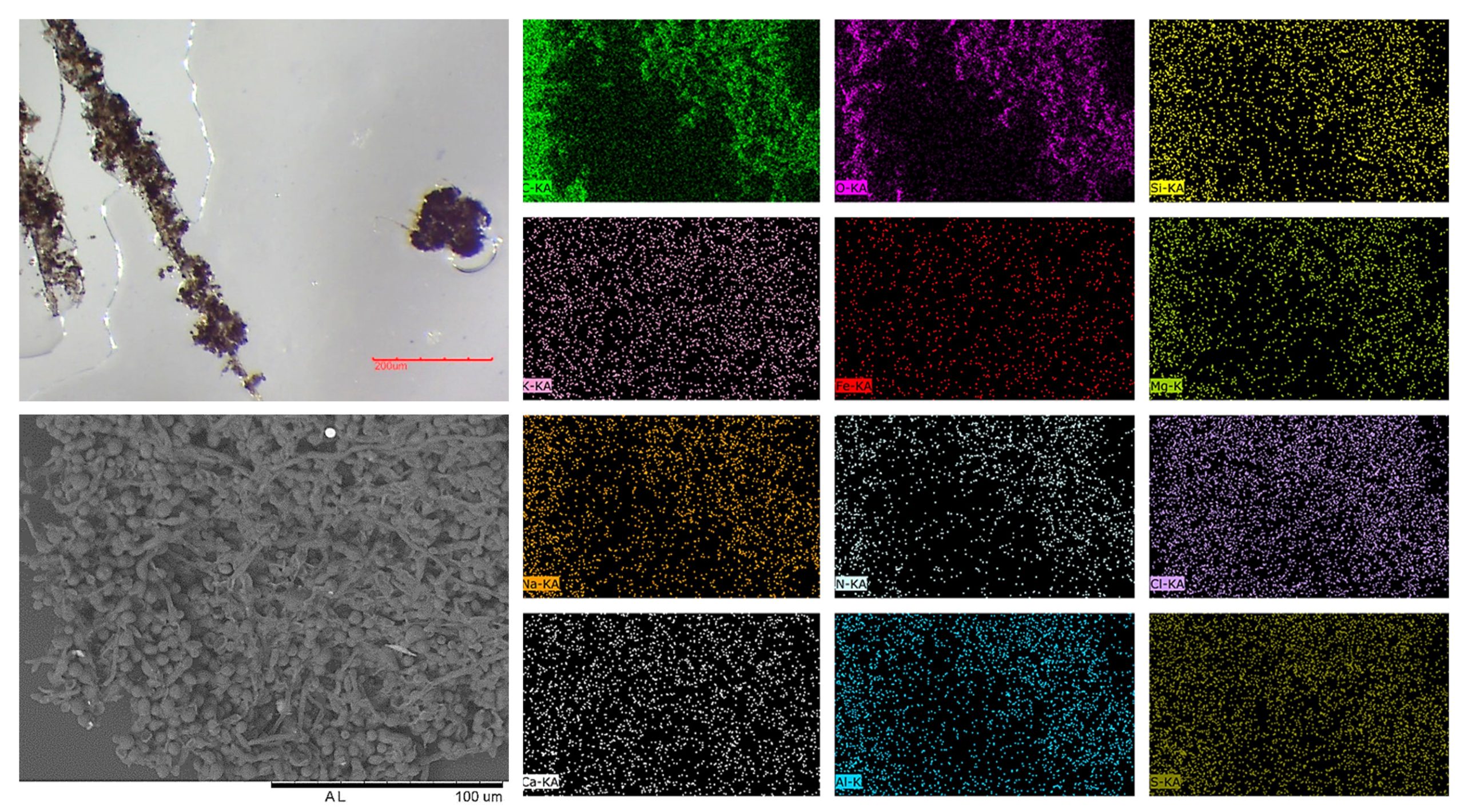
Dust Characterisation Case Study using Optical Microscopy and Scanning Electron Microscopy (SEM)
Detailed analysis of dust samples from a heat exchange unit in Derry/Londonderry
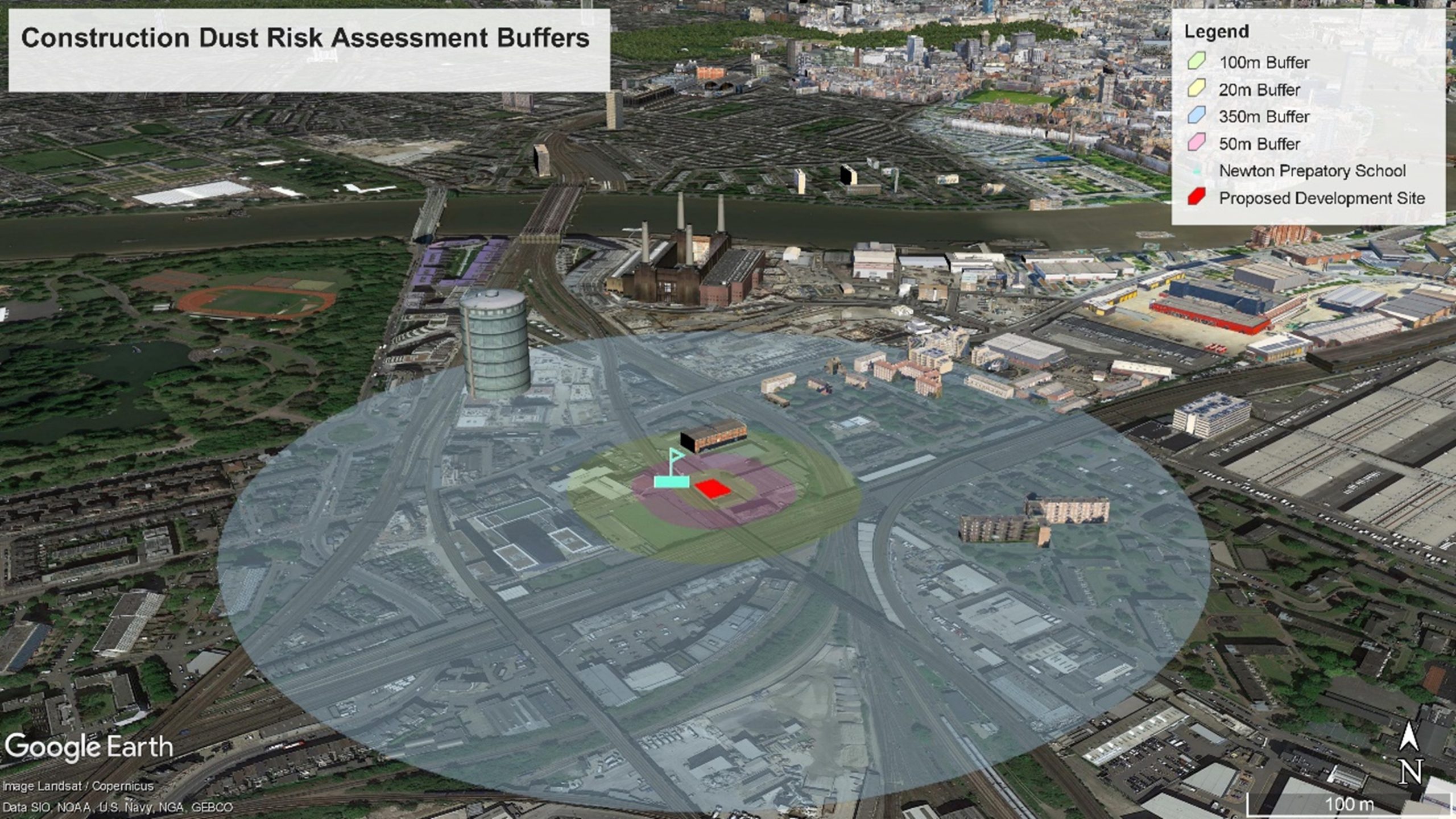
Construction Dust Risk Assessment Case Study
Assessment of construction emissions for a mixed use development in London

The business was formed in 2004

We are employee owned
Over 125,000 samples analysed